
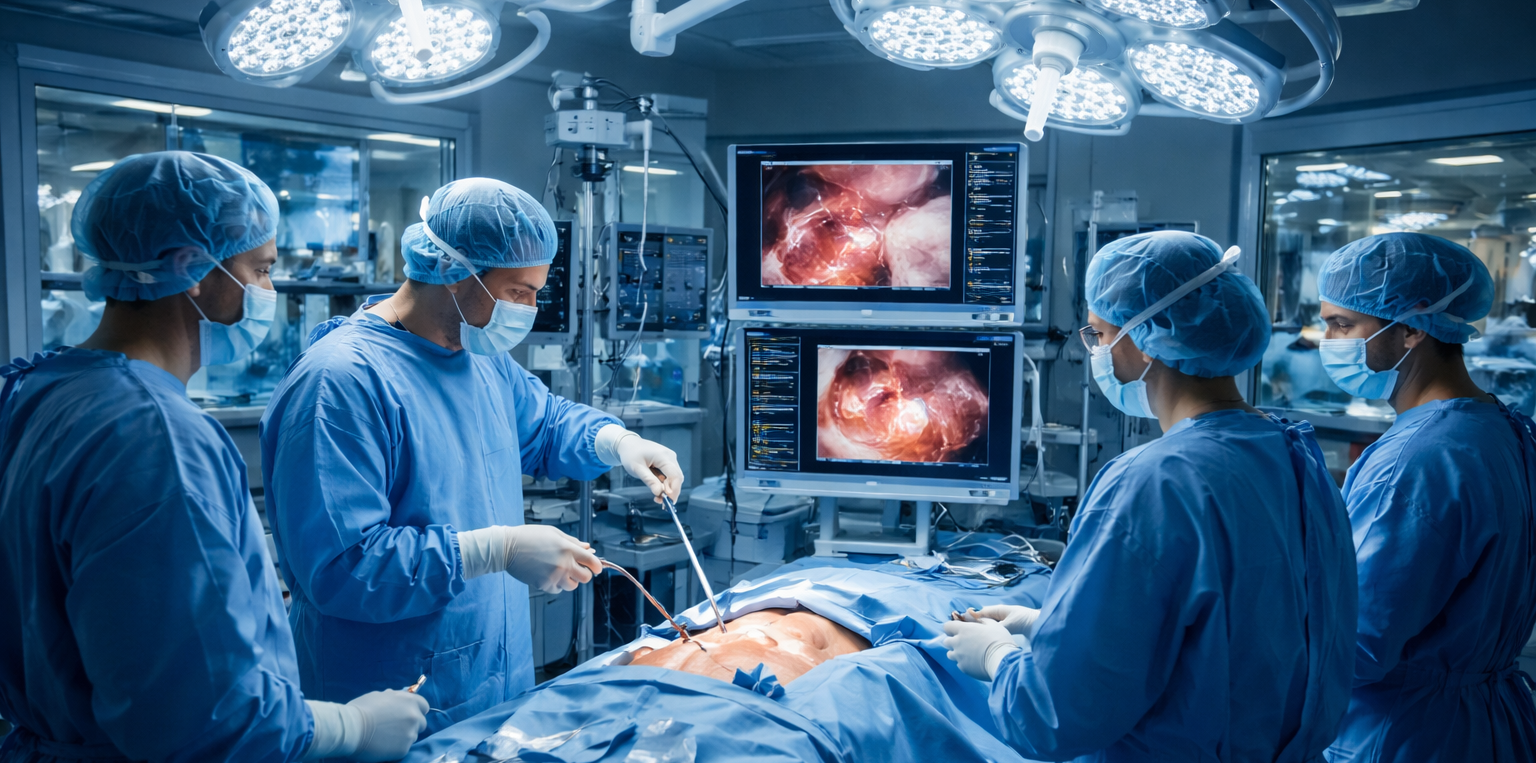
Laparoscopic Major Surgery
At Sanjeevini Hospital, we understand that facing major surgery can be stressful and overwhelming. That’s why we focus on laparoscopic major surgery, a modern technique that allows patients to undergo complex procedures safely, with less pain, smaller incisions, and faster recovery. This approach ensures that patients receive the best care while minimizing physical and emotional stress.
What is Laparoscopic Major Surgery?
Laparoscopic major surgery, also called minimally invasive surgery, is a technique where surgeons perform complex procedures through small incisions, usually less than an inch. Using a laparoscope, which is a thin tube with a high-definition camera, the surgeon can see the organs clearly on a screen. Specialized instruments are inserted through these small openings to carry out the surgery.
Unlike traditional open surgery, which requires large cuts, laparoscopic surgery is gentler on the body. Even though it is used for major procedures, it allows patients to heal faster, experience less pain, and face a lower risk of complications.
Benefits of Laparoscopic Major Surgery
Patients who undergo laparoscopic major surgery enjoy several important benefits:
Smaller incisions result in less pain during and after surgery
Faster recovery allows patients to return to daily life sooner
Reduced scarring makes wounds almost invisible once healed
Lower risk of infection due to smaller wounds and less exposure
High precision thanks to camera guidance and advanced surgical instruments
Shorter hospital stays compared to traditional open surgery
Types of Major Surgeries Performed
Sanjeevini Hospital offers a wide range of laparoscopic major surgeries, including:
Gallbladder and liver surgeries for stones, cysts, or other conditions
Bariatric surgery for patients seeking safe, long-term weight loss solutions
Colorectal surgery for conditions such as colon polyps, diverticulitis, or colorectal cancer
Complex hernia repairs for large, recurrent, or difficult hernias
Gynecological surgeries, including removal of fibroids, ovarian cysts, and treatment of endometriosis
Spleen and pancreas procedures for patients requiring specialized care
Each surgery is performed with careful planning and precision to ensure safety and the best possible outcome for every patient.
Preparing for Surgery
Before undergoing laparoscopic major surgery, patients undergo a detailed consultation. The surgeon evaluates the condition, explains the procedure, and answers all questions. Preoperative tests are performed to ensure that the patient is fit for surgery. Patients are also given guidance on:
Diet and nutrition before surgery
Medications to take or avoid
What to expect on the day of surgery
How to prepare emotionally and physically for the procedure
How the Surgery is Performed
The surgery begins with general anesthesia to ensure that the patient is comfortable and pain-free. Small incisions, usually 3 to 5 depending on the procedure, are made in the abdomen. A laparoscope provides a clear, magnified view of the organs, and specialized instruments are used to carry out the surgery with precision.
The surgeon carefully performs the procedure, minimizing damage to surrounding tissues. After the surgery, the incisions are closed neatly with sutures or surgical glue to promote faster healing. Patients are monitored closely in the hospital to ensure that they are stable and comfortable.
Recovery After Surgery
Recovery after laparoscopic major surgery is generally faster and easier than after traditional open surgery. Patients may feel mild soreness or discomfort near the incision, which is normal and temporary. Recovery guidance includes:
Gentle walking soon after surgery to aid healing
Following diet and fluid intake instructions
Taking medications as prescribed for pain and infection prevention
Avoiding heavy lifting or strenuous activity for the first few weeks
Attending follow-up appointments to monitor healing
Hospital stays usually range from 2 to 5 days depending on the type of surgery. Full recovery can take a few weeks, but most patients experience significantly less pain and faster return to normal life compared to open surgery.
Why Choose Sanjeevini Hospital?
Sanjeevini Hospital is known for providing high-quality, patient-centered care. Patients choose us because:
Experienced surgeons skilled in complex laparoscopic procedures
Modern operation theatres and advanced equipment for safe surgery
Personalized attention from consultation to full recovery
Focus on comfort, safety, and faster recovery
Supportive staff who guide patients and families through every step
Moving Forward
Choosing laparoscopic major surgery at Sanjeevini Hospital means choosing a safer, gentler, and faster path to recovery. Our team is ready to guide you through every step of your journey, answer your questions, and provide the highest quality care.
Schedule a consultation today to learn how laparoscopic major surgery can help you regain your health and improve your quality of life.
Book Your Appointment
Fill the details and connect with us instantly on WhatsApp.