
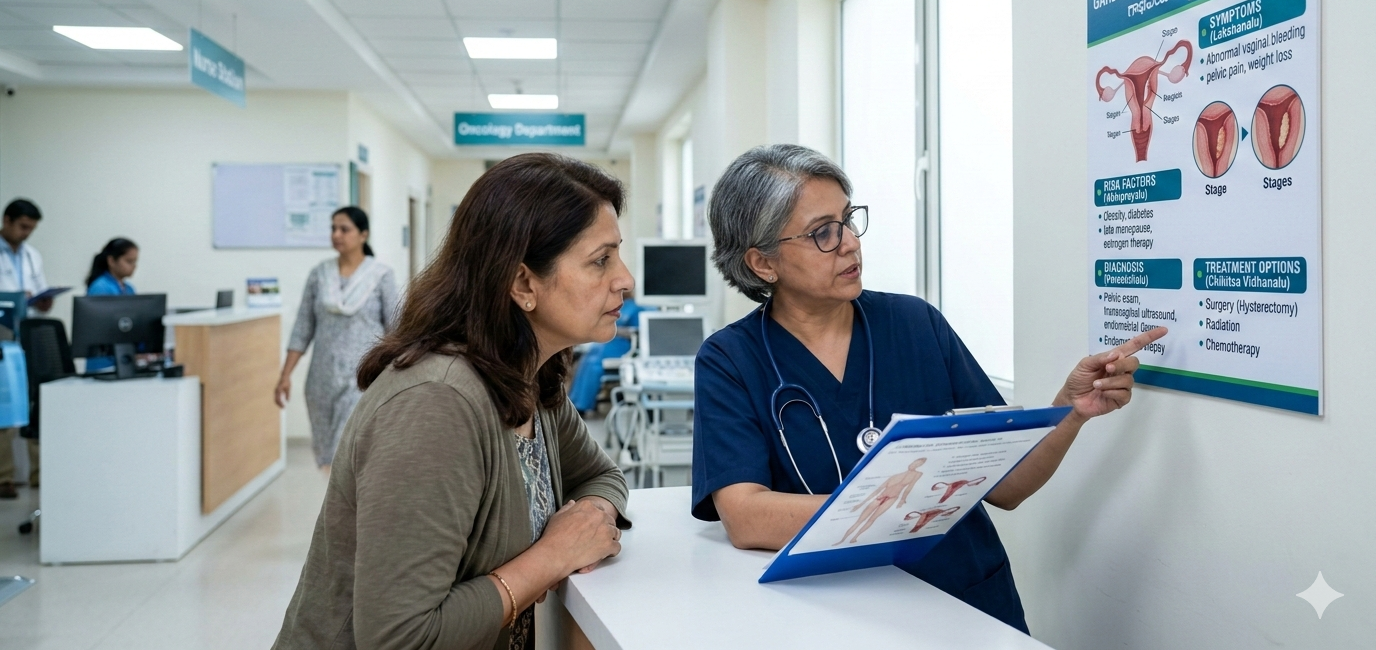
Uterine (Endometrial) Cancer – Diagnosis and Treatment
Uterine cancer, also called endometrial cancer, starts in the inner lining of the uterus. It is one of the most common cancers seen in women after menopause. The good thing is that in many cases it shows early warning signs, especially abnormal bleeding, which helps in early detection and successful treatment.
At Sanjeevini Hospital, we focus on early diagnosis, correct staging, and proper treatment planning for better recovery and long-term health.
What is Uterine (Endometrial) Cancer?
The uterus is the organ where a baby grows during pregnancy. The inner lining of this organ is called the endometrium. When cells in this lining grow abnormally and multiply without control, it leads to endometrial cancer.
It is more commonly seen in:
Women above 45 years
Women who have reached menopause
Women with obesity
Women with diabetes or hormonal imbalance
Early detection plays a major role in complete cure.
Main Symptoms to Watch For
The most common and important symptom is abnormal vaginal bleeding.
Other symptoms include:
Bleeding after menopause
Heavy or irregular periods
Bleeding between periods
Watery or blood-stained discharge
Pelvic pain in later stages
Any bleeding after menopause should never be ignored. Early medical consultation makes treatment easier and more successful.
How It Is Diagnosed
Diagnosis is done carefully to confirm the condition and find the stage.
Common tests include:
Pelvic examination
Ultrasound scan to check thickness of uterine lining
Endometrial biopsy to confirm cancer cells
CT scan or MRI if needed to check spread
Once confirmed, staging helps decide the correct treatment plan.
Treatment Options
Treatment depends on the stage of cancer and overall health of the patient.
Surgery
Removal of the uterus (hysterectomy) is the main treatment. In many cases, ovaries and nearby lymph nodes are also removed. Early-stage cancer may be completely cured with surgery alone.
Radiation Therapy
Used after surgery in certain cases to reduce the chance of recurrence.
Chemotherapy or Hormone Therapy
Recommended in advanced stages or specific cases to control cancer spread.
Treatment is personalized for every patient to ensure safety and best results.
Recovery and Follow-Up Care
After treatment, regular follow-up visits are very important to monitor recovery and detect any recurrence early.
Maintaining healthy weight, controlling diabetes and blood pressure, and attending regular gynecological checkups help in long-term health.
At Sanjeevini Hospital, we provide complete support from diagnosis to recovery with careful monitoring and compassionate care.
Book Your Appointment
Fill the details and connect with us instantly on WhatsApp.