
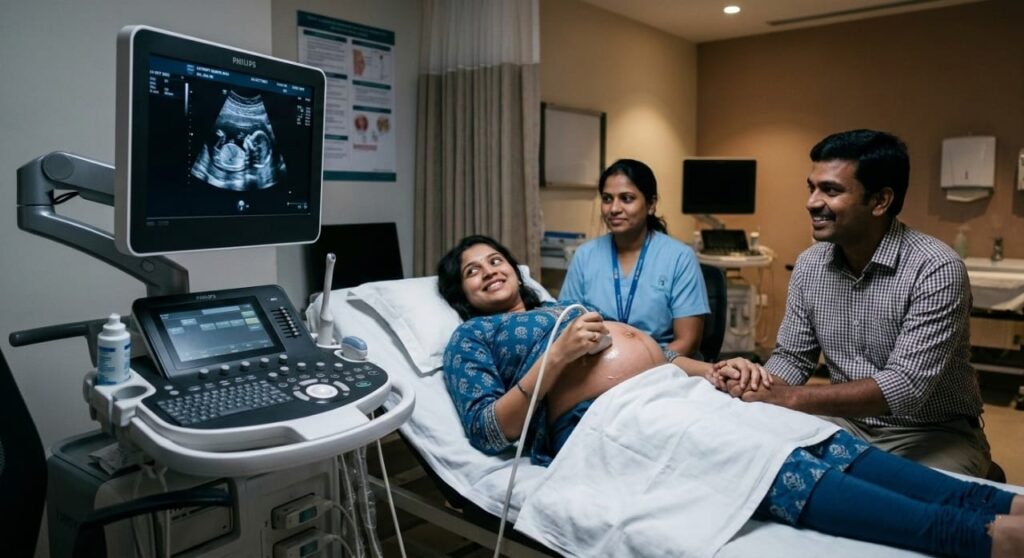
A Complete Guide to 1st, 2nd, and 3rd Trimester :
Pregnancy is a beautiful and important phase in a woman’s life. Ultrasound Scans play a key role in monitoring the baby’s growth and ensuring the health of both mother and baby throughout pregnancy.
This article explains the purpose and importance of pregnancy scans done in the first, second, and third trimesters in a clear and patient-friendly way.
What Are Ultrasound Scans?
Ultrasound Scans are safe, painless medical tests that use high-frequency sound waves to create images of the baby inside the womb. These scans do not use radiation and are considered completely safe during pregnancy.
1st Trimester Ultrasound Scan (6–13 Weeks)
The first trimester scan is usually the first scan done in pregnancy.
A dating scan is advised:
- Around 15 days after a missed period, or
- Between 6 to 8 weeks from the first day of the last menstrual period
Through Ultrasound Scans in the first trimester, doctors can confirm:
- Whether the pregnancy is inside the uterus
- Whether the pregnancy is in the tubes or ovaries (ectopic pregnancy)
- Whether it is a single pregnancy or twins
- Presence of the baby’s heartbeat
- Whether the pregnancy is progressing normally
This scan helps detect problems at an early stage.
2nd Trimester Ultrasound Scan (18–24 Weeks)
The second trimester scan, also known as the anomaly or Level-II scan, is one of the most detailed pregnancy scans.
Ultrasound Scans in this stage help assess:
- Baby’s brain, heart, spine, kidneys, hands, and legs
- Structural or birth defects
- Facial development such as cleft lip
- Placenta position
- Amniotic fluid levels
- Baby’s growth according to gestational age
If parents wish, the baby’s gender may also be identified during this scan.
3rd Trimester Ultrasound Scan (28–40 Weeks)
After 28 weeks, Ultrasound Scans may be advised depending on the mother’s condition.
These scans help evaluate:
- Baby’s weight and growth
- Baby’s position for delivery
- Amniotic fluid levels
- Placental function
- Baby’s readiness for birth
Additional scans like Doppler and Biophysical Profile may be recommended in high-risk pregnancies.
Are Ultrasound Scans Safe During Pregnancy?
Yes. Ultrasound Scans have been used for many decades and are proven to be safe when performed by trained professionals. They do not cause harm to the mother or the baby.
Conclusion
From early pregnancy confirmation to monitoring growth and delivery readiness, Ultrasound Scans are an essential part of prenatal care. Regular scans help ensure a safe, healthy, and confident pregnancy journey for both mother and baby.
If advised by your doctor, timely Ultrasound Scans should never be delayed.
Comments: