
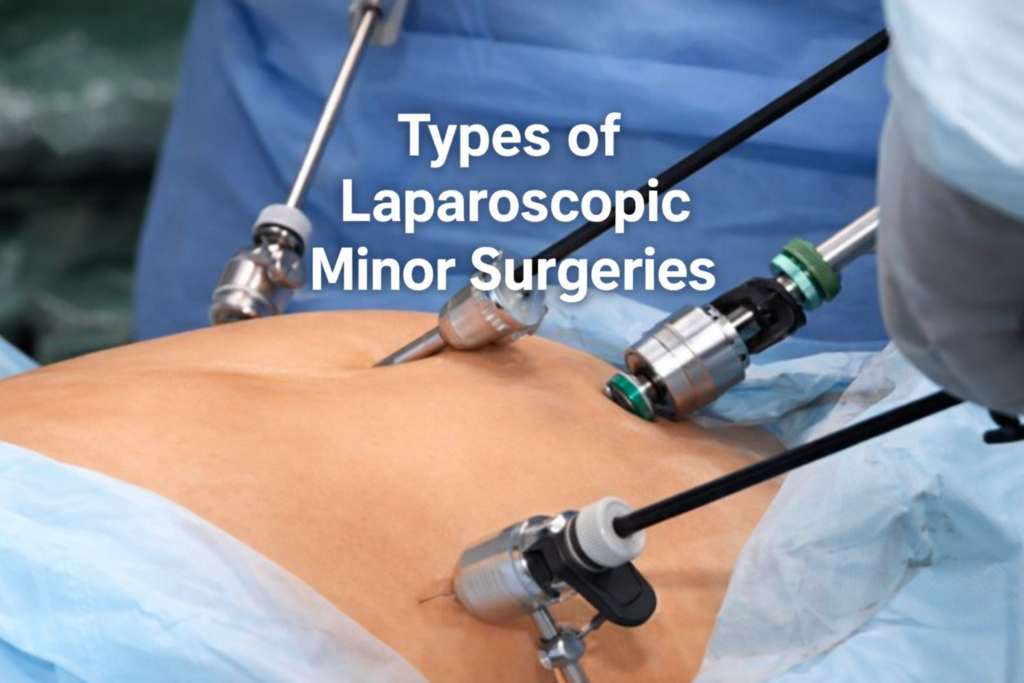
Surgery usually creates fear in many people because of pain, large cuts, and long recovery time. With medical advancements, this perception has changed. Today, laparoscopic surgery has made many procedures safer and easier. Knowing the types of laparoscopic minor surgeries helps patients understand treatment options and feel more confident before surgery.
Laparoscopic procedures are widely preferred due to minimal incisions, faster healing, and reduced discomfort.
How Laparoscopic Technology Works and Its Benefits
Many patients wonder how surgeons perform operations through very small cuts, usually around half to one centimeter. This is possible because of advanced laparoscopic technology. One of the main strengths of the types of laparoscopic procedures is the use of a special camera called a laparoscope.
A laparoscope is a thin tube with a high-definition camera and bright light. It is inserted through a small incision, giving the surgeon a clear internal view on a monitor. Using fine instruments through other small openings, surgery is performed with accuracy.
Key benefits of this technology include:
- Minimal damage to surrounding tissues
- Less blood loss during surgery
- Smaller and less visible scars
- Reduced post-operative pain
- Faster healing and recovery
Because of these advantages, laparoscopic surgery is considered a safe and modern surgical approach.
Laparoscopic Appendix Surgery
Appendicitis causes sudden abdominal pain and requires timely surgical treatment. Among commonly performed types of laparoscopic procedures, appendix removal is one of the most reliable options.
The infected appendix is removed using small instruments without a large incision. This reduces physical stress on the body and helps patients recover faster.
Common benefits include:
- Shorter hospital stay
- Reduced need for pain medications
- Early return to normal activities
- Lower risk of wound infection
Laparoscopic Gallbladder Removal Surgery
Gallstones can lead to severe pain, nausea, and digestive discomfort. Gallbladder removal is one of the most frequently performed types of laparoscopic minor surgeries.
The gallbladder is safely removed through small incisions. After surgery, the body adapts well, and most patients can continue normal eating habits.
Advantages of this surgery include:
- Quick procedure time
- Minimal post-surgery pain
- Faster discharge from hospital
- Long-term relief from gallstone symptoms
Laparoscopic Hernia Repair
A hernia occurs when internal organs push through a weakened muscle wall. Modern types of laparoscopic hernia repair focus on strengthening the affected area with minimal tissue damage.
In this procedure, a surgical mesh is placed to support the weak spot.
Key benefits are:
- Less muscle cutting
- Reduced stiffness after surgery
- Early mobility and faster recovery
- Lower recurrence rates
Laparoscopic Ovarian Cyst Removal
Ovarian cysts are common and may cause pain, irregular periods, or fertility concerns. One of the most effective types of laparoscopic surgeries for women is ovarian cyst removal.
Only the cyst is removed while preserving healthy ovarian tissue.
This approach helps by:
- Protecting hormonal balance
- Maintaining fertility potential
- Reducing post-surgical discomfort
- Allowing faster recovery
Diagnostic Laparoscopy
When scans and tests do not clearly identify a problem, diagnostic laparoscopy is used. It is one of the important types of laparoscopic procedures for accurate diagnosis.
This method allows doctors to:
- Directly view internal organs
- Identify hidden causes of pain
- Treat minor issues during the same procedure
- Avoid unnecessary major surgeries
Laparoscopic Fibroid Surgery
Uterine fibroids can cause heavy bleeding, pain, and pregnancy-related issues. Selected cases are treated using types of laparoscopic fibroid removal techniques.
Benefits of this approach include:
- Preservation of the uterus
- Minimal blood loss
- Shorter recovery time
- Better reproductive outcomes
Recovery After Laparoscopic Minor Surgeries
Recovery after laparoscopic surgery is generally smooth. Patients can usually walk within a few hours and resume light activities soon.
Common recovery advantages:
- Short hospital stay
- Less post-operative pain
- Faster return to daily routine
- Reduced risk of complications
Final Conclusion
Advancements in surgical care have significantly improved patient outcomes. The types of laparoscopic minor surgeries offer safe, effective, and comfortable treatment options. Early consultation with an experienced surgeon helps determine the best laparoscopic approach for each condition and ensures better recovery.
Comments: